Arun Gupta
CEO of EduKyu

.jpg%3Falt%3Dmedia%26token%3Df43d1a0a-c5d6-4ad6-ab70-52ff3a75779f&w=1920&q=75)

More than 600 MBA colleges in India accept entrance exams other than CAT for admissions in 2026. Premier institutions like XLRI Jamshedpur, SIBM Pune, ISB Hyderabad, and TISS Mumbai offer high-ranking management programs without requiring a CAT score. Students can choose from exams like XAT, SNAP, NMAT, GMAT, or MICAT based on their profile and career goals.
Which non-CAT exam has the highest acceptance among top colleges?
Can you get into XLRI or ISB without appearing for CAT?
Are placements from non-CAT MBA colleges comparable to IIMs?
Welcome to this complete guide on the best MBA colleges in India that don't require CAT. We've broken down college-wise admission processes, entrance exam options, fee structures, and placement records to help you make a clear decision about your MBA journey.
XLRI Jamshedpur, SIBM Pune, ISB Hyderabad, and TISS Mumbai are among India's top MBA colleges that don't need CAT scores.
Alternative exams include XAT, SNAP, NMAT, GMAT, MICAT, and CMAT, each accepted by different sets of colleges.
Average salary packages from these institutions range between ₹15-30 LPA, with some exceeding ₹40 LPA for premium programs.
Admissions typically involve shortlisting based on exam scores, followed by Group Discussion (GD) and Personal Interview (PI) rounds.
Non-CAT colleges offer specialized MBA programs in HR, Marketing, Finance, Operations, and emerging fields like FinTech and Data Analytics.
Working professionals can opt for Executive MBA or PGDM programs at institutions like ISB and SPJIMR without CAT requirements.
Choosing the right exam depends on your work experience, academic background, and target specialization.
Non-CAT MBA colleges are business schools in India that accept entrance exams other than the Common Admission Test (CAT) for their MBA or PGDM programs. These institutions conduct their own exams or accept national-level tests like XAT, SNAP, NMAT, GMAT, and MICAT.
The idea started because many top private institutions wanted more control over their admission process. They designed exams that test different skill sets or cater to specific program needs. For instance, XLRI uses XAT to find candidates strong in decision-making and ethical reasoning, while ISB prefers GMAT for its global MBA standards.
Students benefit from this system because it gives them multiple opportunities. If you don't perform well in CAT, you can still apply to excellent colleges through other routes. It also reduces the pressure of putting all hopes on one exam.
Some colleges prefer their own exams to test skills beyond aptitude. TISS Mumbai uses CUET-PG because their HR programs focus on social awareness and organizational behavior. SIBM Pune's SNAP exam is designed to identify well-rounded candidates who can handle diverse business scenarios.
Others accept international exams like GMAT or GRE to attract students with global exposure. ISB Hyderabad and IIFT Delhi value work experience and international profiles, so GMAT fits their admission criteria better than CAT.
This approach also helps colleges build unique student profiles. Instead of competing only for high CAT scorers, they find students who match their program philosophy and learning style.
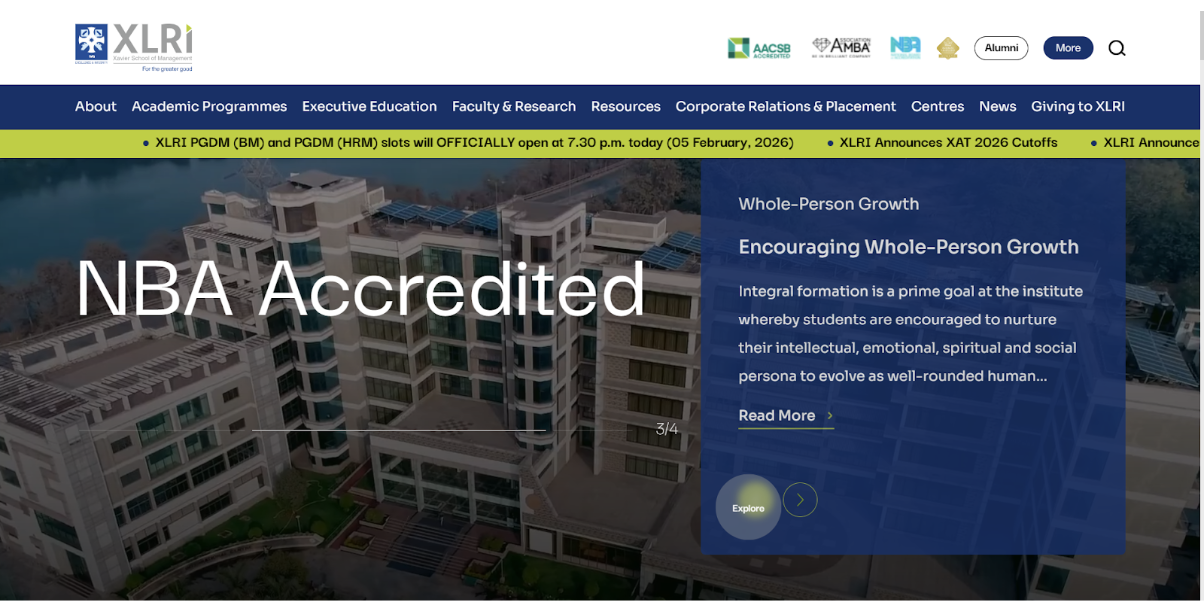
XLRI is one of India's oldest and most respected business schools. It accepts only XAT scores for its MBA programs in Business Management (BM) and Human Resource Management (HRM). The institute is known for strong placements, ethical leadership training, and a tight-knit alumni network.
Program Duration: 2 years Entrance Exam: XAT Average Package: ₹31.08 LPA Specializations: HR, Marketing, Finance, Operations, Business Management
XLRI's HRM program is considered the best in India. Companies like Tata, Aditya Birla, and Deloitte actively recruit from campus. The admission process involves XAT score evaluation, Group Discussion, and Personal Interview. Work experience is valued but not mandatory.
The campus is in Jamshedpur, a Tata township with good infrastructure. Students get exposure to live projects, corporate mentorships, and international exchange programs with partner universities in Europe and the US.
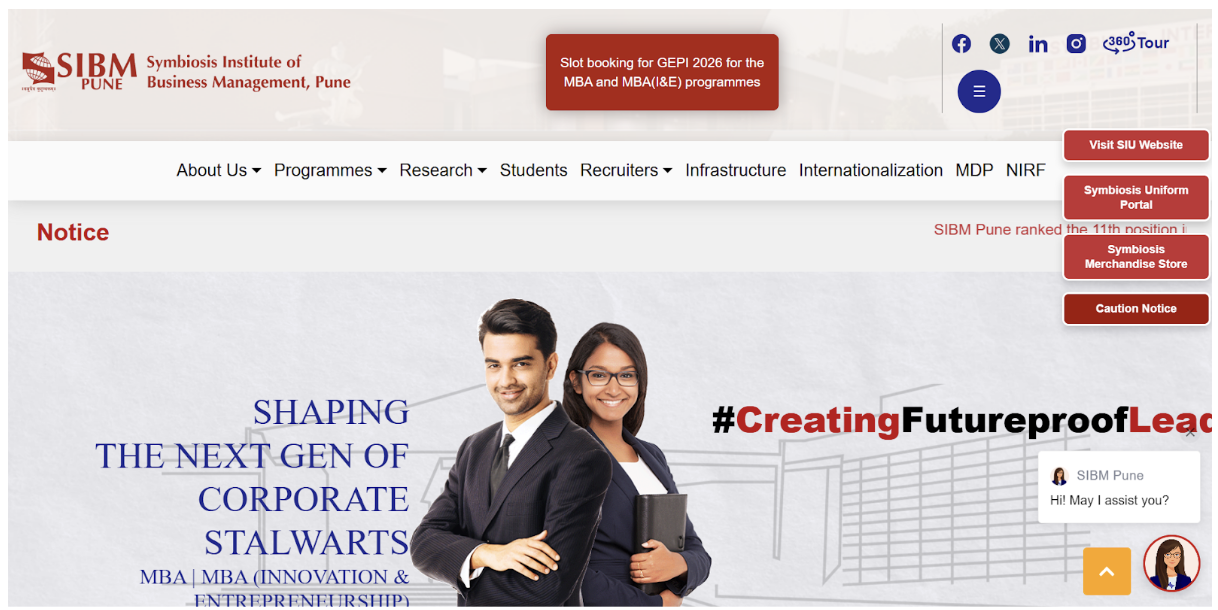
SIBM Pune is part of Symbiosis International University and ranks among the top 20 business schools in India. It uses SNAP exam scores for admission to its flagship MBA program. The college is known for strong marketing and finance placements.
Program Duration: 2 years Entrance Exam: SNAP Average Package: ₹28.83 LPA Specializations: Marketing, Finance, HR, Operations
SNAP is a relatively easier exam compared to CAT, making SIBM a popular choice for students looking for good ROI without extreme competition. The exam is conducted online and tests verbal ability, quantitative aptitude, and general awareness.
SIBM has a well-established corporate network. Recruiters include Deloitte, KPMG, Amazon, and Asian Paints. The institute also offers certifications in digital marketing, business analytics, and entrepreneurship as part of the curriculum.
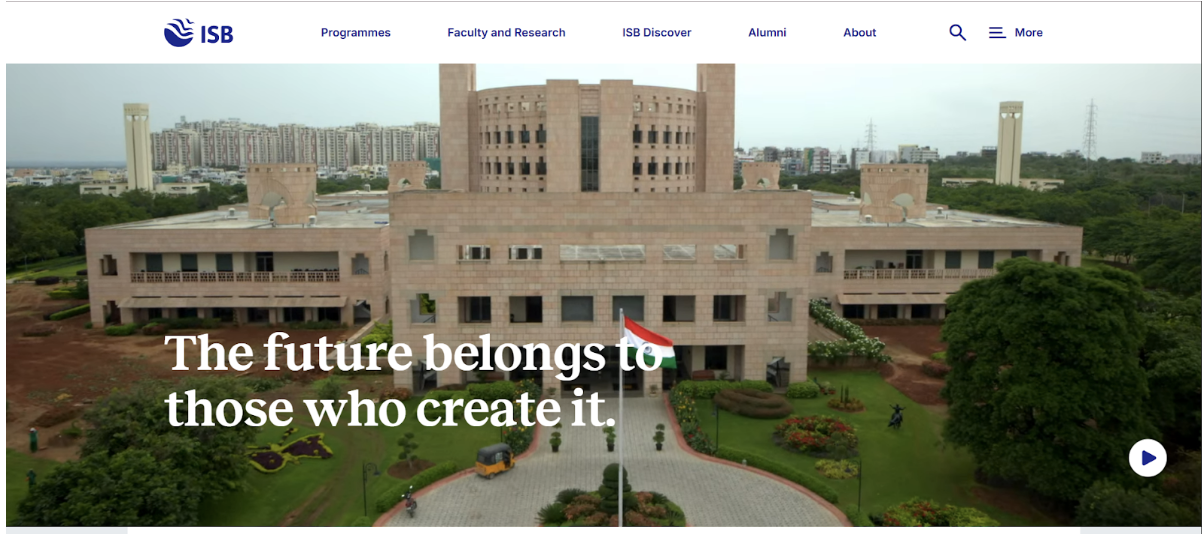
Indian School of Business is India's only globally ranked business school outside the IIM system. It offers a one-year Post Graduate Programme in Management (PGP) for professionals with work experience. ISB accepts GMAT and GRE scores instead of CAT.
Program Duration: 1 year Entrance Exam: GMAT or GRE Average Package: ₹33.25 LPA Specializations: Finance, Strategy, Marketing, Operations, Consulting
ISB is ideal for mid-career professionals who want to accelerate their growth without taking a two-year break. The program is intense and requires at least 2 years of work experience for admission. Most students join with 4-5 years of experience.
The curriculum is designed in collaboration with Wharton and Kellogg. Faculty includes international professors and industry experts. Placements are top-tier, with companies like McKinsey, BCG, Goldman Sachs, and Google hiring regularly from campus.
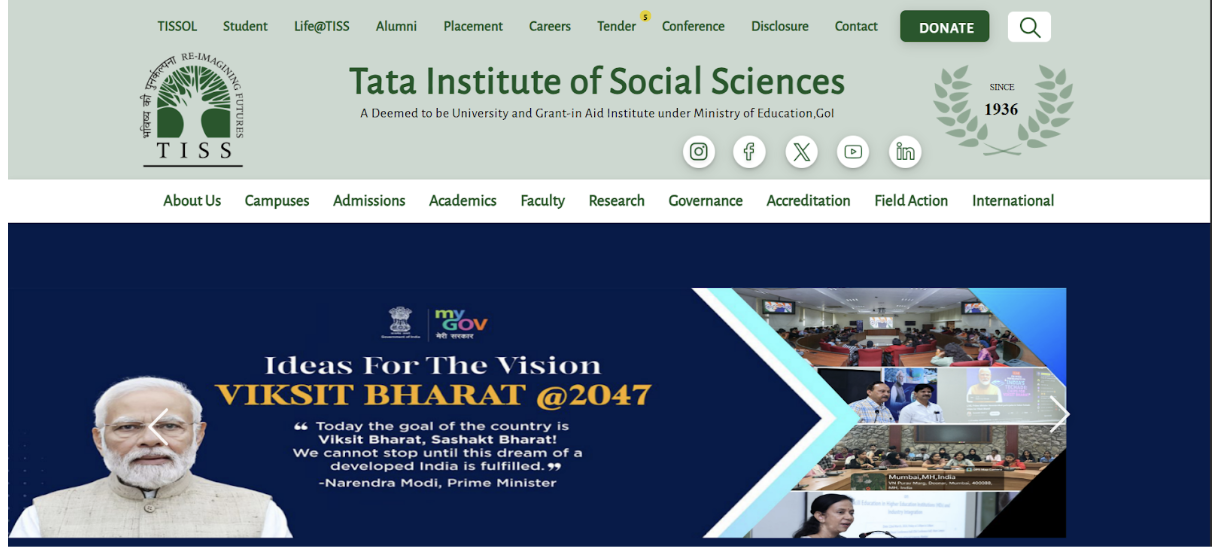
Tata Institute of Social Sciences is known for its unique approach to management education. It uses CUET-PG scores for admission to its MBA in Human Resource Management & Labour Relations program. TISS focuses on social impact, organizational behavior, and people management.
Program Duration: 2 years Entrance Exam: CUET-PG Average Package: ₹28.20 LPA Specializations: HR & Labour Relations
TISS is best suited for students who want to work in HR roles with social enterprises, NGOs, or corporate CSR departments. The program is research-heavy and includes fieldwork in rural and urban communities. This gives students real-world exposure to labor laws, employee welfare, and organizational development.
Fees are lower compared to other top colleges, making it a high-ROI option. The campus is in Mumbai, which offers good networking opportunities. Alumni work with organizations like Tata, Mahindra, ITC, and UN agencies.
SP Jain Institute of Management & Research is a premier business school in Mumbai. It accepts GMAT scores for its Post Graduate Diploma in Management (PGDM) program. SPJIMR is known for its strong finance and marketing departments.
Program Duration: 2 years Entrance Exam: GMAT Average Package: ₹33.75 LPA Specializations: Finance, Marketing, Operations, Information Management
SPJIMR follows a unique admission process. Shortlisting is heavily based on profile (academics, work experience, extracurriculars), not just exam scores. The institute looks for well-rounded candidates who can contribute to the classroom and campus culture.
The college has industry tie-ups with companies like HDFC, ICICI, L&T, and Hindustan Unilever. Students also get access to live consulting projects, rural immersion programs, and international exchange opportunities.
Indian Institute of Foreign Trade offers specialized MBA programs in International Business. It accepts GMAT scores for its MBA (IB) program, which is designed for students interested in global trade, export-import management, and international marketing.
Program Duration: 2 years Entrance Exam: GMAT Average Package: ₹31.20 LPA Specializations: International Business, Trade Policy, Global Finance
IIFT is under the Ministry of Commerce, Government of India. It has strong connections with export councils, trade bodies, and multinational companies. Students get internships with companies involved in cross-border trade, logistics, and supply chain management.
The curriculum includes global immersion programs where students visit international markets and study trade practices. This makes IIFT graduates highly sought after for roles in international business development and global operations.
Narsee Monjee Institute of Management Studies conducts its own entrance exam called NMAT. The college offers PGDM programs across multiple campuses in Mumbai, Bangalore, and Hyderabad. NMIMS is known for good placements and a strong peer network.
Program Duration: 2 years Entrance Exam: NMAT Average Package: ₹11.5 LPA Specializations: Finance, Marketing, HR, Operations, Business Analytics
NMAT is considered moderately difficult and has a shorter exam duration compared to CAT. The exam is computer-based and allows multiple attempts within the application window, so students can retake it to improve scores.
NMIMS has a large alumni base across industries. Recruiters include EY, PwC, Capgemini, Wipro, and major BFSI companies. The Mumbai campus has the highest placements, while Bangalore and Hyderabad campuses offer slightly lower but still competitive packages.
Mudra Institute of Communications, Ahmedabad is India's top college for marketing and communication specializations. It uses MICAT (MICA Admission Test) for admissions. The institute is ideal for students who want to build careers in advertising, brand management, digital marketing, and media.
Program Duration: 2 years Entrance Exam: MICAT Average Package: ₹19.22 LPA Specializations: Marketing Communication, Advertising, Brand Management, Digital Media
MICAT is a unique exam that tests creativity, divergent thinking, and communication skills alongside aptitude. The interview process includes group exercises and creative tasks to assess how candidates think and present ideas.
MICA has close ties with advertising agencies like Ogilvy, Leo Burnett, Dentsu, and brands like Unilever, Procter & Gamble, and ITC. Students work on live brand campaigns during their course, giving them hands-on experience before graduation.
XAT is conducted by XLRI and accepted by over 160 business schools across India. The exam tests decision-making, ethical reasoning, and business awareness along with quantitative and verbal skills. It's slightly longer than CAT and includes an essay writing section.
Accepted by: XLRI, SPJIMR (for shortlisting), Great Lakes, IMT Ghaziabad Exam Duration: 3 hours 5 minutes Difficulty Level: Moderate to High
XAT is ideal for students who are good at reasoning and have strong general knowledge. The exam pattern includes questions on current affairs, social issues, and ethical dilemmas. Scoring above 95 percentile gives access to top colleges like XLRI and SPJIMR.
SNAP is conducted by Symbiosis International University for admissions to all Symbiosis MBA colleges. The exam is shorter and easier compared to CAT, making it a good option for students who want multiple attempts without too much preparation.
Accepted by: SIBM Pune, SCMHRD, SIIB, SIOM, all Symbiosis institutes Exam Duration: 1 hour Difficulty Level: Moderate
SNAP allows three attempts in one admission cycle. Your best score is considered for shortlisting. The exam tests general English, quantitative ability, and analytical reasoning. Scoring 85+ percentile is good for Symbiosis colleges outside Pune, while 95+ is needed for SIBM Pune.
NMAT is conducted by GMAC for NMIMS and other partner institutions. The exam is computer-based and allows retakes within a 75-day window. Students can improve their scores by appearing multiple times.
Accepted by: NMIMS, VIT Vellore, SRM Chennai, Shiv Nadar University Exam Duration: 2 hours Difficulty Level: Moderate
NMAT has a flexible testing schedule. You can choose your exam date and time slot. The exam is adaptive, meaning difficulty changes based on your performance. Scoring 230+ out of 360 is considered good for NMIMS Mumbai campus.
GMAT is an international exam accepted by business schools worldwide. In India, ISB, SPJIMR, IIFT, and other top institutions accept GMAT scores. The exam tests analytical writing, reasoning, and quantitative skills in English.
Accepted by: ISB, IIFT, SPJIMR, Great Lakes, IIM Ahmedabad (1-year PGPX) Exam Duration: 3 hours 7 minutes Difficulty Level: High
GMAT scores are valid for 5 years, so you can take the exam early and apply when ready. The exam is ideal for working professionals who want to pursue global MBA programs or
one-year executive MBAs in India. Scoring 700+ is competitive for ISB and top international colleges.
CMAT is conducted by the National Testing Agency (NTA) for admission to AICTE-approved MBA programs. Many state universities and private colleges accept CMAT scores. It's a good option for students looking at affordable MBA programs.
Accepted by: JBIMS, Fore School of Management, Great Lakes, TAPMI Manipal Exam Duration: 3 hours Difficulty Level: Easy to Moderate
CMAT is one of the easiest MBA entrance exams in India. Scoring 90+ percentile gives access to good state-level colleges. The exam includes sections on quantitative aptitude, logical reasoning, language comprehension, and general awareness.
Choosing the right exam depends on your profile, work experience, and target colleges. Here's how to decide:
If you're a recent graduate with no work experience, focus on exams that don't prioritize professional background. SNAP, NMAT, and XAT are good options. These exams allow you to apply to colleges that accept freshers in their MBA programs.
Avoid GMAT-based colleges like ISB, which require 2+ years of work experience. Instead, look at XLRI, SIBM, or NMIMS where academic performance and entrance scores matter more than professional experience.
If you have 2-5 years of work experience, GMAT is your best bet. ISB, IIFT, and SPJIMR value your professional background and give weightage to work achievements during shortlisting. GMAT also keeps your options open for international MBA programs.
XAT is another strong choice for working professionals who want to stay in India. XLRI's BM program attracts candidates with diverse work backgrounds, and the college values real-world experience in group discussions and interviews.
If you're set on HR as a career, prioritize XAT for XLRI or CUET-PG for TISS. Both institutions are known for their HR programs and have strong placements in talent management, organizational development, and labor relations.
SNAP is a secondary option for SCMHRD Pune, which also has a decent HR track. Avoid general MBA exams if HR is your only focus, as specialized colleges offer better industry connections and domain knowledge.
GMAT is the gold standard for finance and consulting roles. ISB and SPJIMR have the best placements in investment banking, private equity, and management consulting. Companies like McKinsey, Bain, Goldman Sachs, and JP Morgan actively recruit from these campuses.
NMAT for NMIMS is a good backup option. NMIMS has a strong finance department and sends students to BFSI companies like HDFC, ICICI, Kotak, and Credit Suisse.
If you want to build a career in marketing, advertising, or brand management, MICAT for MICA is the best choice. MICA is India's only specialized marketing college with deep industry connections in advertising and digital media.
SNAP for SIBM is a solid alternative. SIBM Pune has strong marketing placements with FMCG companies, e-commerce firms, and digital agencies.
.jpg?alt=media&token=f71908c8-8c05-4124-b8c7-f88130cb8109)
Most non-CAT MBA colleges follow a similar admission process. Here's what to expect:
Register for your chosen entrance exam (XAT, SNAP, NMAT, GMAT) through the official website. Start preparation 3-4 months in advance. Focus on your weak areas and practice mock tests regularly.
Each exam has a different pattern and difficulty level. XAT includes essay writing, SNAP is shorter, and GMAT has an analytical writing section. Adjust your preparation strategy based on the exam you're targeting.
After the exam, colleges release cutoff percentiles for shortlisting. If you meet the cutoff, you're called for the next round. Shortlisting also considers your academic record, work experience, and diversity factors.
For example, XLRI gives weightage to Class 10, Class 12, and graduation marks along with XAT scores. SPJIMR looks at your overall profile, including extracurriculars and community work. ISB focuses heavily on work experience and career progression.
Group discussions test your communication skills, teamwork, and ability to think on your feet. You'll be given a topic (current affairs, business case, or abstract theme) and asked to discuss it with 8-10 other candidates.
The key is to contribute meaningfully without dominating the conversation. Listen to others, build on their points, and present your views clearly. Avoid getting aggressive or cutting off other speakers.
Personal interviews assess your clarity of thought, career goals, and fit with the program. Interviewers ask about your background, work experience, reasons for choosing MBA, and knowledge of your target specialization.
Prepare answers for common questions like "Why MBA?", "Why this college?", and "Where do you see yourself in 5 years?". Be honest about your strengths and weaknesses. Show genuine interest in the program and how it aligns with your career plans.
Some colleges also include a Written Ability Test (WAT) where you write an essay on a given topic. This tests your writing skills and ability to structure arguments logically.
Final selection is based on a composite score that includes your entrance exam score, academic record, GD-PI performance, and work experience. Each college has its own weightage formula. For example, XLRI gives 50% weight to XAT, 30% to GD-PI, and 20% to academics.
If you're selected, you'll receive an admission offer via email. You'll need to pay a seat confirmation fee to secure your admission. Most colleges allow you to defer admission by one year if you have valid reasons like job commitments.
Understanding fees and return on investment helps you make an informed decision. Here's a comparison of top non-CAT MBA colleges:
Key Observations:
TISS Mumbai offers the best ROI due to low fees and decent placements.
ISB has the highest fees but also the highest average package, making it worth it for experienced professionals.
XLRI and SPJIMR offer strong ROI with placements matching or exceeding their fees within the first year.
NMIMS and SIBM are mid-range options with balanced fees and placements.
When comparing ROI, also consider factors like alumni network, industry connections, and long-term career growth. Some colleges may have lower starting packages but offer better career progression over 5-10 years.
Choosing the right MBA college without CAT can feel confusing with so many exams, cutoffs, and admission processes. EduKyu helps you make this decision easier by offering personalized counseling and university comparisons.
We work with UGC-approved universities and guide students through the entire admission process. Our counselors explain exam options, help you choose colleges based on your profile, and provide transparent information about fees, EMI plans, and placement records.
You can talk to our career advisors on call or WhatsApp. We don't push admissions—we help you understand which path fits your goals and budget. Whether you're a working professional looking at ISB or a fresh graduate considering SIBM, we give you clear, honest advice.
Talk to a Career Advisor (Call / WhatsApp) for free counseling and university comparison support.
India has excellent MBA colleges that don't require CAT scores. XLRI, SIBM, ISB, TISS, and SPJIMR offer world-class management education through alternative exams like XAT, SNAP, NMAT, and GMAT. Your choice should depend on your work experience, career goals, and budget.
Non-CAT exams give you flexibility and multiple chances to get into top business schools. They also let you apply to colleges that match your profile better than a one-size-fits-all approach. Focus on choosing the right exam, preparing well, and presenting a strong profile during admissions.
The right MBA college can change your career path and open doors to leadership roles, consulting, finance, marketing, or entrepreneurship. Make your decision based on research, honest self-assessment, and guidance from experts who understand the Indian MBA landscape.
1. Can I get into XLRI without CAT? Yes, XLRI accepts only XAT scores for MBA admissions. You don't need CAT to apply. XLRI offers MBA programs in Business Management and Human Resource Management, both of which require XAT scores for shortlisting.
2. Which is easier: CAT or SNAP? SNAP is easier than CAT. It has a shorter duration, simpler questions, and allows three attempts in one cycle. CAT is more competitive with higher difficulty levels in quantitative and logical reasoning sections.
3. Is GMAT accepted by Indian MBA colleges? Yes, top colleges like ISB Hyderabad, IIFT Delhi, SPJIMR Mumbai, and IIM Ahmedabad (PGPX) accept GMAT scores. GMAT is ideal for working professionals with 2+ years of experience.
4. Are placements from non-CAT colleges good? Yes, colleges like XLRI, ISB, SIBM, and SPJIMR have placements comparable to top IIMs. Average packages range from ₹20-35 LPA, with some roles offering ₹50+ LPA in consulting and finance.

CEO of EduKyu
A seasoned expert with 11 years of experience in creating impactful content on distance education and online MBAs. Over the years, I have elevated EduKyu into a top platform, bridging students with universities for comprehensive and accessible higher education.

No blogs found for this category.